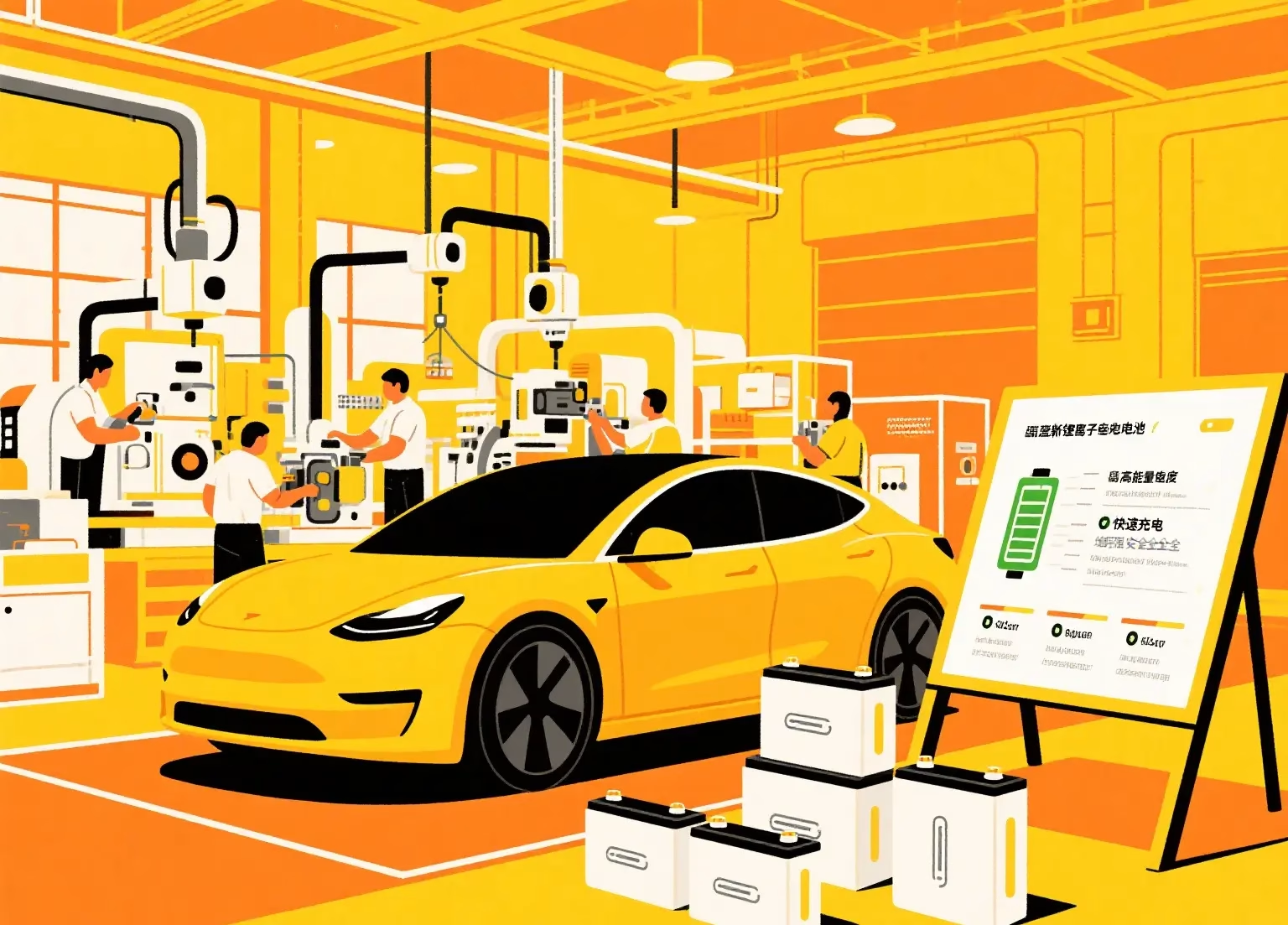
The global shift toward electric vehicles (EVs) has intensified the race to develop lithium-ion batteries that deliver higher energy density, faster charging, and enhanced safety. At the heart of this technological leap lies a critical component often overshadowed by flashy battery chemistries: the electrolyte. As researchers delve deeper into optimizing electrolytes, breakthroughs in lithium salts, solvents, and additives are reshaping the future of EV mobility, addressing longstanding concerns from range anxiety to thermal runaway risks.
The Electrolyte: A Hidden Architect of Battery Performance
While electrodes and separators grab headlines, the electrolyte serves as the unsung hero, facilitating the flow of lithium ions between the cathode and anode during charging and discharging. Its composition directly impacts a battery’s ability to store energy, recharge quickly, and withstand extreme conditions—factors that make or break consumer confidence in EVs.
Traditional electrolytes, composed of lithium salts dissolved in organic solvents, have long struggled to balance conflicting demands. High energy density often comes at the cost of safety, as flammable solvents can ignite during thermal runaway. Fast charging, meanwhile, can degrade electrode materials and destabilize the electrolyte, shortening battery life. Today, researchers are reimagining electrolyte formulations to overcome these trade-offs, focusing on three key areas: advanced lithium salts, innovative solvents, and multifunctional additives.
Lithium Salts: The Foundation of Ion Conductivity
Lithium salts are the workhorses of electrolytes, determining ionic conductivity, thermal stability, and compatibility with electrode materials. For decades, lithium hexafluorophosphate (LiPF₆) has dominated the market, prized for its high solubility, good ionic conductivity, and ability to form protective films on aluminum current collectors—critical for preventing corrosion. However, its Achilles’ heel lies in poor thermal stability: at high temperatures, LiPF₆ decomposes, releasing hydrofluoric acid (HF) that erodes electrode interfaces and triggers safety hazards.
This vulnerability has spurred the search for alternatives. One promising candidate is lithium difluoro(oxalato)borate (LiDFOB), which combines the best traits of two well-studied salts: lithium tetrafluoroborate (LiBF₄) and lithium bis(oxalato)borate (LiBOB). LiDFOB exhibits superior thermal stability compared to LiPF₆, performs well in both high and low temperatures, and forms robust solid electrolyte interphase (SEI) layers—thin films that protect electrodes from degradation. Its ability to reduce HF formation also enhances long-term battery durability, a key advantage for EVs expected to last 10 years or more.
Another contender is lithium bis(trifluoromethanesulfonyl)imide (LiTFSI), lauded for its high ionic conductivity and wide electrochemical stability window. However, its tendency to corrode aluminum current collectors has limited widespread adoption. Researchers are now exploring hybrid salt systems, blending LiTFSI with small amounts of LiPF₆ to mitigate corrosion while retaining high performance. Such combinations could unlock faster charging rates, as LiTFSI’s high conductivity allows lithium ions to move more freely between electrodes.
Lithium fluorinated alkyl phosphates, such as LiPF₃(C₂F₅)₃ (LiFAP), are also gaining traction. These salts offer exceptional thermal stability and flame resistance, addressing safety concerns in high-energy batteries. Early tests show LiFAP-based electrolytes can withstand temperatures 50°C higher than those using LiPF₆ without significant degradation, a game-changer for EVs operating in hot climates or under heavy load.
Solvents: Balancing Conductivity and Safety
Solvents act as the medium for lithium ion transport, and their properties—viscosity, boiling point, and flammability—are pivotal. Organic carbonates like ethylene carbonate (EC) and dimethyl carbonate (DMC) have long been industry standards, valued for their high dielectric constants and ability to dissolve lithium salts. Yet their low flash points make them a fire risk, a major drawback in EVs where battery fires can have catastrophic consequences.
The quest for safer solvents has led to the rise of ionic liquids (ILs)—salts that exist in liquid form at room temperature. ILs are non-flammable, thermally stable, and offer wide electrochemical windows, making them ideal for high-voltage batteries. Their high viscosity, once a limitation, is being addressed by blending them with low-viscosity co-solvents like fluoroethers, reducing resistance to ion flow. In trials, IL-based electrolytes have shown remarkable performance in extreme temperatures, maintaining conductivity even at -20°C, a boon for EVs in cold regions.
Aqueous electrolytes, once dismissed for their narrow stability windows, are experiencing a revival. The “water-in-salt” (WIS) concept, which uses highly concentrated lithium salts to suppress water electrolysis, has expanded their operating voltage to over 3V—competitive with organic solvents. WIS electrolytes are non-flammable, low-cost, and environmentally friendly, aligning with the sustainability goals of automakers. Recent advancements have pushed their energy density close to that of organic systems, with one prototype achieving 460 Wh/kg—enough to power an EV over 600 km on a single charge.
Mixed solvent systems are also emerging as a practical solution. By combining organic carbonates with small amounts of ionic liquids or flame-retardant additives, researchers have created electrolytes that retain high conductivity while reducing flammability. For example, adding 20% of a phosphorus-based ionic liquid to a traditional EC/DMC blend raises the flash point by 30°C, significantly lowering fire risk without sacrificing performance. Such hybrids are already being tested in commercial EVs, with early data showing improved thermal management during fast charging.
Additives: The Secret Sauce for Enhanced Performance
Additives, though present in minute quantities (often less than 5% by weight), wield outsized influence over battery performance. These compounds fine-tune electrolyte properties, from forming stable SEI layers to suppressing dendrite growth—needle-like lithium deposits that can short-circuit batteries.
Film-forming additives are among the most critical. Compounds like vinylene carbonate (VC) and fluoroethylene carbonate (FEC) react with electrode surfaces during the first charge, forming a dense, flexible SEI layer that blocks solvent molecules while allowing lithium ions to pass through. This layer prevents electrode degradation, extending battery life by up to 30% in some tests. FEC, in particular, has become a staple in high-energy batteries, as it enhances stability in nickel-rich cathodes—materials prized for their ability to store more lithium ions.
Flame-retardant additives are gaining prominence as safety regulations tighten. Phosphorus-based compounds like trimethyl phosphate (TMP) and triphenyl phosphate (TPP) act by suppressing free radicals in combustion reactions, slowing or stopping fires. When added at 10-15% concentrations, they can reduce electrolyte flammability by 50% without drastically lowering ionic conductivity. Automakers are increasingly integrating these additives into their battery packs, especially in regions with strict safety standards like the European Union.
Conductivity boosters are addressing the challenges of fast charging. Compounds like lithium bis(fluorosulfonyl)imide (LiFSI) enhance ion mobility, allowing batteries to accept higher currents during charging. In lab tests, LiFSI-doped electrolytes have enabled EV batteries to recharge from 10% to 80% in under 15 minutes—comparable to refueling a gasoline car. The key is balancing conductivity with stability; too much LiFSI can corrode electrodes, so researchers are pairing it with protective additives to mitigate this effect.
Overcharge protection additives are another innovation, designed to prevent voltage spikes that can trigger thermal runaway. Molecules like 9-phenylcarbazole polymerize on the cathode surface when overcharged, forming a conductive barrier that limits further lithium ion intercalation. This self-regulating mechanism adds a layer of safety, complementing the electronic management systems in modern EVs.
The Road Ahead: Toward Commercialization
While lab breakthroughs are promising, translating them to mass production is fraught with challenges. Cost remains a major hurdle: advanced salts like LiDFOB and LiFAP are currently 3-5 times more expensive than LiPF₆, though economies of scale could bring prices down as demand grows. Solvents like ionic liquids, too, need cost reductions; researchers are exploring renewable feedstocks, such as plant-based esters, to lower production costs.
Compatibility is another issue. New electrolytes must work seamlessly with existing electrode materials and manufacturing processes. For example, high-concentration electrolytes, while stable, can be corrosive to standard battery components, requiring tweaks to cell design. Automakers are collaborating with material suppliers to co-develop electrolytes and electrodes, ensuring they perform optimally as a system.
Regulatory standards will also play a role. As governments mandate stricter safety and sustainability criteria, electrolytes that are non-toxic, recyclable, and fire-resistant will gain an edge. The European Union’s upcoming Battery Regulation, for instance, requires batteries to meet stringent thermal safety benchmarks by 2027, a deadline pushing manufacturers to adopt next-gen electrolytes.
A Paradigm Shift for EVs
The electrolyte revolution is more than a technical upgrade; it’s a paradigm shift in how we think about battery performance. By 2030, experts predict that advanced electrolytes will enable EVs with 800+ km range, 10-minute charging, and 20-year lifespans—specs that would make electric vehicles indistinguishable from, if not superior to, their gasoline counterparts.
For consumers, this means greater convenience and peace of mind. No longer will range anxiety or charging time be barriers to adoption. For the planet, it means a faster transition to clean transportation, as safer, longer-lasting batteries reduce waste and lower the carbon footprint of EVs.
As automakers race to integrate these innovations into their next-generation models, one thing is clear: the future of electric mobility hinges on the humble electrolyte. It’s a reminder that in the quest for technological progress, sometimes the most transformative breakthroughs lie in the smallest, most overlooked components.
In the end, the electrolyte isn’t just a medium for ions—it’s the key to unlocking the full potential of electric vehicles, driving us toward a safer, more sustainable future on the road.