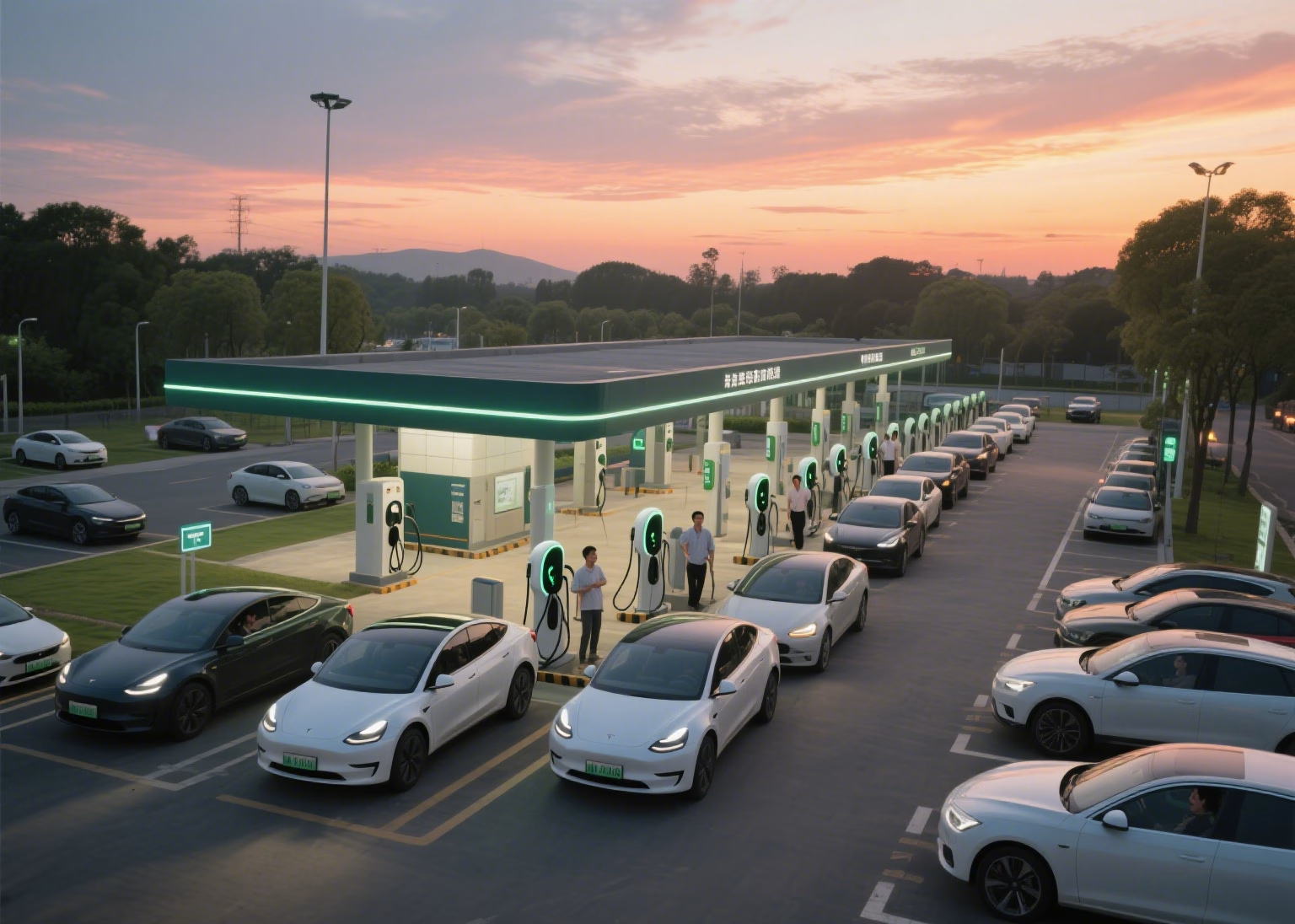
The automotive industry is going through a massive transformation, driven largely by the steady rise of electrification. As electric vehicles (EVs) move from being niche luxury products to mainstream transportation options, a big challenge is becoming more and more obvious: how to efficiently and affordably power the growing number of EVs without overburdening the existing infrastructure. A recent study, “Optimal Pricing Strategy for Electric Vehicle Charging Scheduling of Charging Stations”, offers an appealing plan for dealing with this complex future. It puts forward a dynamic pricing model that could completely change how we charge our EVs, affecting everyone from daily commuters to major utility companies.
Published in Modern Electric Power in February 2025, this paper takes a deep dive into the complex relationship between the power grid and the transportation network. These two fields, which have been separate for a long time, are becoming closely connected because of the popularity of EVs. The core idea is both simple and groundbreaking: by cleverly adjusting charging station prices, we can minimize the overall operating costs of this newly linked “power-traffic network”. This would lead to a more stable power grid, less crowded roads, and possibly lower charging costs for consumers.
For years, the EV revolution has been seen as a solution to many environmental problems and a way to achieve energy independence. However, while the fast growth in EV adoption is praiseworthy, it has revealed a significant weakness: the uncoordinated, “disorderly charging behavior” of a large number of EVs can put a lot of pressure on both the power grid and the transportation network. Just imagine thousands, or even millions, of EVs plugging in at the same time during peak hours – the risk of local brownouts, grid instability, and huge traffic jams around popular charging spots becomes very real. This isn’t just a theoretical issue; utilities across the United States are already struggling with the effects of the growing number of EVs, and urban planners are trying to figure out how to manage traffic around future super charging hubs.
This research directly addresses this upcoming challenge by suggesting that price, when used wisely, can be a powerful tool for coordination. The authors, GU Yingbin, WU Chaohang, WANG Xiaofeng, XU Yingchun, and CHEN Luye, propose an optimal pricing strategy that takes into account both the operational costs of the power grid and the efficiency of the transportation network. Their method involves a smart combination of models: they use a branch flow model to describe the power grid and a Wardrop user equilibrium model to characterize the transportation network. The goal is clear: to get the lowest possible operating cost for the entire power-traffic network.
What does this mean in real terms for the American automotive industry? It points to a future where charging an EV is less about finding the nearest plug and more about balancing time and cost. Today, most EV charging prices are relatively fixed, often based on kilowatt-hour usage or a flat fee per session. In contrast, the proposed optimal pricing strategy supports dynamic rates that change based on real-time grid conditions, traffic congestion, and charging station availability. This isn’t entirely new; some utilities already offer time-of-use rates for home charging. But extending this idea to public charging networks, with prices adjusting based on the combined state of both the electricity grid and road traffic, is a big step forward.
The Interconnected Web: Power and Traffic Dynamics
To really understand the importance of this optimal pricing strategy, you need to recognize the “strong coupling” between the power and transportation networks in the age of EVs. This coupling shows up in two main ways:
- Traffic affects power: The routes EV drivers take, which are influenced by traffic conditions, directly impact when and where electricity is needed. For example, if a highway gets congested, drivers might take alternative routes to different charging stations, shifting the demand for electricity across the grid.
- Electricity prices affect traffic: On the other hand, the price of electricity at a charging station can influence where and when EV users choose to travel, affecting traffic flow. A much cheaper charging rate just a few miles off the main road might make drivers take a detour, changing traffic patterns and possibly easing congestion on main roads.
The study emphasizes that ignoring this connection leads to poor results. The authors note that previous research often used the locational marginal price (LMP) of the distribution network to set charging station prices, which limited the flexibility of pricing decisions. The strength of this new approach is that it considers both networks at the same time, allowing for a more detailed and effective pricing system that coordinates their operations.
A Smart Approach to Optimizing Charging
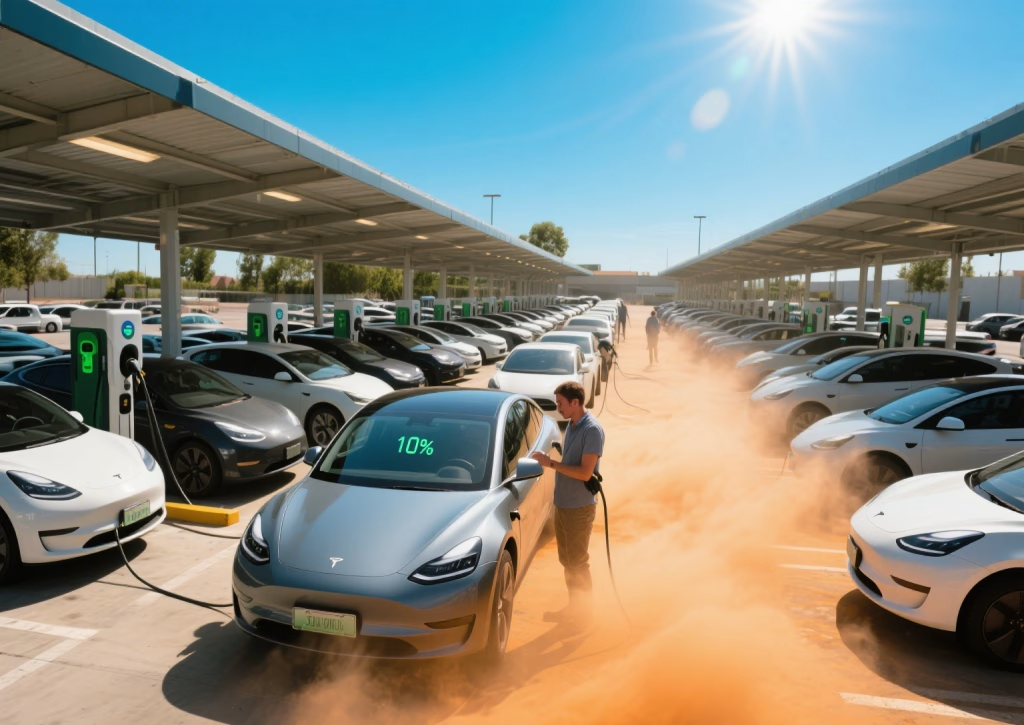
The technical foundation of this proposed system is an adaptive particle swarm optimization (APSO) algorithm. For those not familiar with computational mathematics, think of it as a smart, self-learning system that’s always looking for the “best” outcome. In this case, the APSO algorithm works to find the best charging price for each station by reducing the combined operating costs of the power and transportation networks. The paper tests this algorithm against traditional methods and shows that it’s “effective and superior” at finding better solutions, avoiding the common problem of “premature convergence” that simpler algorithms have.
The case study in the paper shows how well this works using a simulated environment with a 12-node circular road network (with 8 charging stations) and a 21-node radial power distribution network. The results are impressive. Using the optimal pricing from the APSO algorithm (Scenario 1), the researchers found that the overall operating costs of the power-traffic network were lower than when charging prices were based only on power flow equations (Scenario 2). Also, the study found that total travel time in the transportation network was much lower with the optimized pricing, meaning less traffic congestion.
Even more notably, the study compared its optimized pricing model (Scenario 1) with a “random routing” scenario (Scenario 3), where EV users picked routes and charging stations randomly. The difference was clear: total travel time in the transportation network was “much greater” in the random scenario, leading to much higher overall operating costs for the linked power and transportation networks. This highlights how important smart pricing and scheduling are in reducing the negative effects of uncoordinated EV charging. The optimized model not only cuts costs but also makes both the electrical grid and road networks more efficient and safer.
Implications for the American Automotive Ecosystem
The findings of this research have big implications for various stakeholders in the large American automotive ecosystem:
For EV Drivers: Dynamic Convenience and Cost Savings
For everyday EV owners, the optimal pricing strategy could mean a smarter and potentially cheaper charging experience. Imagine your EV’s navigation system not just showing the nearest charger, but the one that’s best in terms of time and cost, all in real-time. This could mean:
- Cost savings: Drivers might be encouraged to charge during off-peak times or at less busy stations, lowering their electricity costs. This fits with utilities’ efforts to manage demand.
- Less waiting: By adjusting prices dynamically, charging station operators can spread out demand, reducing queues and wait times, especially at popular spots.
- Better experience: A smoother charging process, without unexpected congestion or grid issues, makes EVs more appealing, addressing a common worry for potential buyers.
Of course, the challenge is educating consumers about dynamic pricing and making sure it’s clear. A variable pricing model could frustrate people if it’s not communicated well and integrated into easy-to-use vehicle and app interfaces.
For Charging Network Operators: Balancing Finances and the Grid
For companies like Electrify America, ChargePoint, EVgo, and Tesla’s Supercharger network, this research offers a way to optimize their operations. Instead of just selling electricity, they could play an active role in managing the grid and traffic flow. This could mean:
- More revenue: Dynamic pricing lets operators charge more during high demand while still attracting customers during quiet times.
- Better efficiency: Spreading out demand reduces strain on charging equipment, possibly making it last longer and cutting maintenance costs.
- Better grid integration: Charging stations could act like virtual power plants, adjusting prices based on grid signals to encourage or discourage charging. This helps utilities manage peak loads and use more renewable energy, creating new revenue streams for charging providers through grid services.
For Utilities and Power Grid Operators: Stability in a World of Electrons
Utilities and those in charge of keeping the power grid stable stand to benefit the most from this optimal pricing strategy. As more people adopt EVs, the extra electrical load is a big planning challenge. Unmanaged charging could lead to:
- Higher peak demand: EVs plugging in after work, at the same time as home electricity use, could increase peak demand. This might force utilities to upgrade infrastructure or use less efficient peaker plants.
- Grid problems: Sudden, unpredictable changes in demand from lots of EVs could strain local networks and affect regional grid stability.
The proposed optimal pricing strategy is a powerful tool to reduce these risks. By influencing when and where EVs charge, utilities can:
- Smooth out demand: Encourage off-peak charging, reducing stress on the grid during busy times.
- Use more renewables: Incentivize charging when solar or wind power is abundant, using excess energy and reducing waste.
- Strengthen the grid: Better demand management makes the power system more reliable, lowering the chance of blackouts and brownouts.
In short, this research provides a smart way to manage demand, a key part of modern grid management.
For Automakers: Connected Cars Beyond Entertainment
For car manufacturers, the research shows that connectivity and “smart” features are becoming more important than just infotainment. As EVs become mobile energy assets, integrating charging optimization into vehicle systems will be crucial. This could mean:
- Smart charging: Cars could come with features to respond to dynamic pricing, automatically adjusting charging times to save money or support grid stability.
- Vehicle-to-Grid (V2G) potential: While not detailed in the paper, optimal pricing lays the groundwork for V2G, where EVs can send power back to the grid during high demand, becoming energy resources. This could create new business models for automakers and owners.
- More partnerships: The growing link between transportation and energy means closer collaboration between automakers, charging providers, and utilities.
The Road Ahead: Challenges and Opportunities
While the “Optimal Pricing Strategy” research paints an appealing picture, putting it into widespread use in the U.S. faces several big hurdles:
- Technical integration: Making dynamic pricing work across different charging networks, vehicle platforms, and utility systems needs strong communication standards and interfaces. This is complex, involving many industry players.
- Regulations: Current rules for electricity pricing and transportation management may not fit these dynamic, connected systems. Policymakers need to create new frameworks that encourage innovation while protecting consumers.
- Consumer acceptance: Getting EV owners to adapt to dynamic charging will require clear communication of benefits, user-friendly tools, and possibly financial incentives. Trust in variable pricing is key.
- Data privacy: Collecting and analyzing real-time traffic and charging data raises privacy concerns. These need to be addressed with strong security and clear data policies.
- Infrastructure investment: While optimal pricing can ease some strain, we still need significant investment in smart grid tech, upgraded infrastructure, and more charging stations to support growing EV numbers.
Despite these challenges, the opportunities from smart charging solutions are huge. As the U.S. aims for high EV adoption, efficient and stable charging infrastructure isn’t just a nice-to-have; it’s a must. Research like “Optimal Pricing Strategy for Electric Vehicle Charging Scheduling of Charging Stations” provides the academic and practical knowledge needed to build this future.
The shift to electric transportation is more than just replacing gas engines with electric motors. It means rethinking our energy and transportation networks as one connected system. This study shows that smart EV charging management, driven by dynamic pricing, isn’t just an academic idea. It’s a vital part of making sure the EV revolution delivers on its promises of sustainability, efficiency, and a cleaner, more reliable future for American mobility. The path to optimal EV charging may be complex, but with research leading the way, it’s a journey that can bring us to a better balance between our vehicles, roads, and power grids.