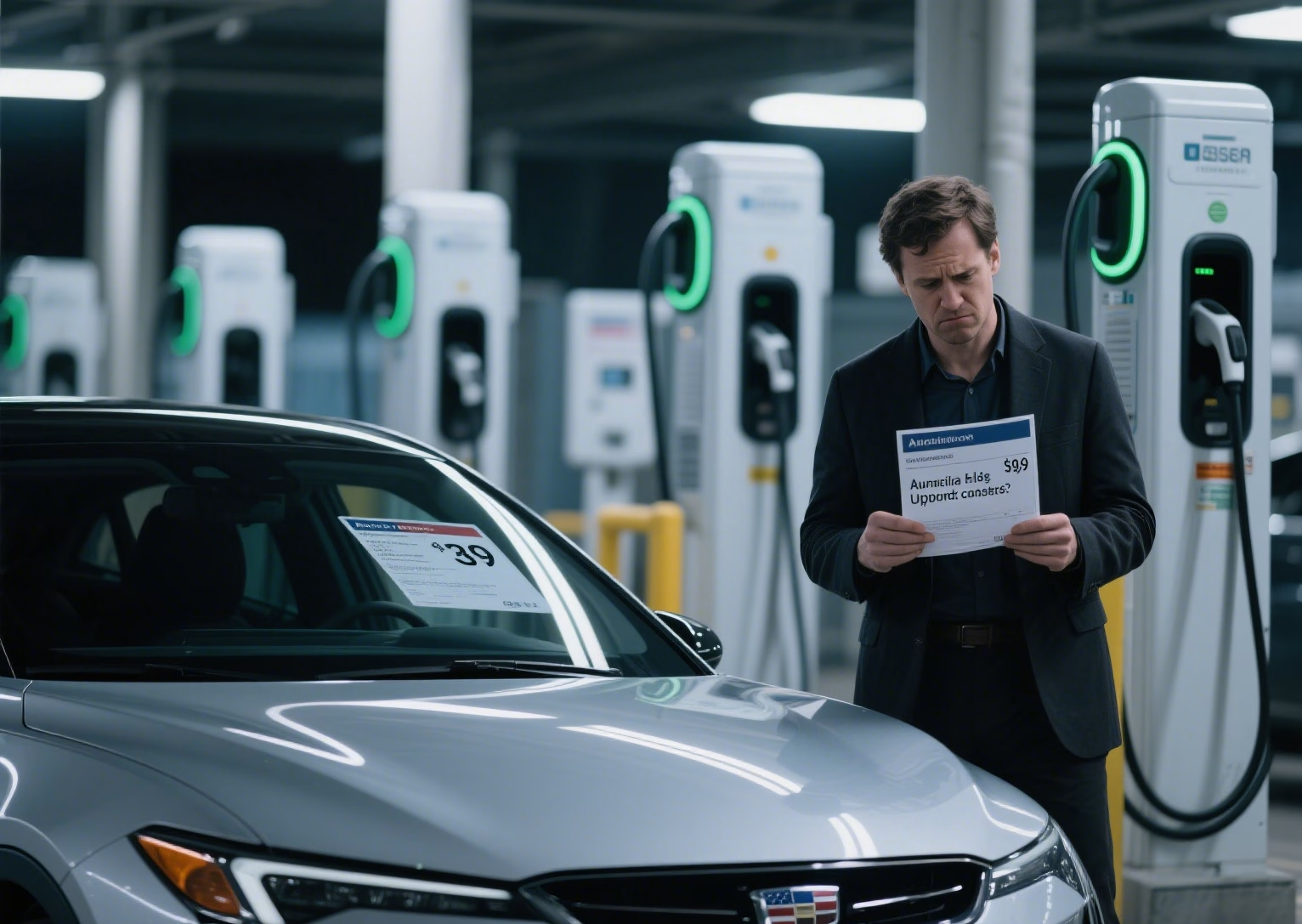
The global automotive landscape is undergoing a monumental shift, with electric vehicles (EVs) at the forefront of this transformation. As nations grapple with energy crises and escalating environmental concerns, the push for sustainable transportation has never been more urgent. China, a pivotal player in the EV revolution, stands as a fascinating case study. The sheer scale of its automotive market, coupled with a proactive stance on EV development, offers invaluable insights into consumer behavior and industry strategies. This in-depth analysis, drawing heavily from a recent study conducted in Dalian City, Liaoning Province, dissects the multifaceted factors influencing EV purchase decisions in the world’s largest automotive market, specifically contrasting the traditional full vehicle sales model with the increasingly relevant bare vehicle (battery rental) model.
The transition from internal combustion engine (ICE) vehicles to EVs is not merely a technological upgrade; it represents a fundamental rethinking of vehicle ownership, infrastructure, and consumer expectations. While the benefits of EVs—reduced emissions, lower running costs, and energy independence—are widely acknowledged, their widespread adoption faces inherent challenges. Battery range anxiety, the initial high purchase price, extended charging times, and concerns about battery longevity and maintenance have historically acted as significant deterrents. These obstacles have spurred innovative business models aimed at mitigating consumer risks and accelerating EV uptake.
Among these models, the bare vehicle sales concept, often coupled with battery rental or battery-as-a-service (BaaS) offerings, has emerged as a particularly compelling strategy. This approach separates the cost of the battery from the vehicle, thereby significantly reducing the upfront purchase price of the EV. Furthermore, it often integrates battery swapping services, promising quicker “refueling” times compared to traditional charging. While this model aims to alleviate some of the core concerns associated with EV ownership, it introduces new considerations, such as ongoing service fees and the operational intricacies of battery swapping networks.
To understand how these dynamics play out in the real world, a comprehensive study was undertaken in Dalian, a significant port city in Northeast China. This research provides an empirical foundation for dissecting consumer preferences and identifying the critical levers that influence purchasing behavior in the context of different EV sales models. The findings not only inform EV manufacturers and dealerships on optimizing their production and sales strategies but also offer crucial insights for policymakers aiming to foster a robust and sustainable EV ecosystem.
Methodology: Unpacking Consumer Choices
The Dalian study employed a meticulous methodology to capture the nuances of consumer decision-making. A total of 592 questionnaires were distributed to citizens in Dalian City between July 10 and August 2, 2024, yielding 551 valid responses, an impressive effective rate of 93%. The questionnaire design was a cornerstone of the research, structured into three distinct parts to gather a holistic view of consumer attributes and preferences.
The first section delved into basic motor vehicle ownership and usage, encompassing critical factors such as current vehicle ownership status, driving experience, average daily commuting distance, weekly transportation expenses, familiarity with EVs, and the minimum acceptable driving range after a full charge. These variables are crucial for understanding the baseline context of potential EV buyers, distinguishing between first-time vehicle purchasers and those looking to replace or supplement an existing vehicle.
The second section focused specifically on purchasing intentions for bare EVs (battery rental) versus full EVs. This part explored vehicle-specific attributes that directly influence purchasing decisions, including driving range, purchase price, energy replenishment time, and cost per 100 kilometers (or 10,000 kilometers). To enhance experimental efficiency and reduce the number of trials, an orthogonal table design was utilized. Crucially, this section also introduced varying battery allocation ratios (1:1.2, 1:1.4, and 1:1.6) to assess consumers’ willingness to accept additional service management fees associated with a reduced waiting time for bare car services. This innovative approach directly addresses one of the key operational challenges of the battery rental model: ensuring sufficient battery availability for swapping without unduly burdening consumers with excessive costs.
The final section gathered socioeconomic attributes of the respondents, including gender, occupation, age, educational background, and monthly household income. These demographic variables provide essential context for segmenting consumer groups and understanding how different societal strata approach EV adoption. The researchers noted that the distribution of gender, age, and income levels in the collected questionnaires was well-balanced, minimizing potential biases.
The analytical backbone of the study was the binomial Logit model. This statistical model is particularly well-suited for analyzing binary outcomes, such as a consumer’s decision to purchase either a full EV or a bare EV. The Logit model quantifies the probability of a consumer choosing one option over another based on a set of independent variables. By estimating the utility function—a mathematical representation of the satisfaction or benefit a consumer derives from a particular choice—the researchers could discern the relative importance and impact of each influencing factor. The utility function for both full vehicles (VAn) and bare vehicles (VBn) was constructed, allowing for a direct comparison of how different attributes contribute to the likelihood of choosing one model over the other.
Key Findings: Decoding Consumer Preferences
The empirical analysis yielded several significant insights into the factors shaping EV purchase decisions in Dalian. The findings underscore the complex interplay of vehicle attributes, personal circumstances, and market models.
Driving Range: A Consistent Positive Influence
The study unequivocally affirmed the positive impact of driving range on purchase decisions. This is a consistent theme in EV adoption research globally; range anxiety remains a primary concern for potential buyers. A longer driving range translates directly into greater utility for the consumer, with the study quantifying this impact: every 50 km increase in driving range boosts the utility value by 0.332. This finding reinforces the critical need for EV manufacturers to continue innovating in battery technology and efficiency to offer vehicles with competitive ranges. For consumers, a greater range means fewer charging stops, more flexibility for longer journeys, and ultimately, a more seamless transition from ICE vehicles. It speaks to a fundamental desire for convenience and unhindered mobility, traits deeply ingrained in the automotive experience.
Personal Purchasing Power: A Counterintuitive Negative Correlation
Perhaps one of the most surprising and counterintuitive findings was the negative correlation between personal purchasing power (reflected by the “household monthly income/vehicle purchase price” ratio) and the utility value of both full and bare EVs. This suggests that individuals with higher purchasing power are less inclined to trust or purchase EVs. The researchers hypothesize that this might stem from a perception that current EV production technology is not yet mature enough to fully replace traditional gasoline vehicles as primary transportation. This insight is particularly intriguing. It challenges the conventional wisdom that higher disposable income directly correlates with early adoption of new, often more expensive, technologies. Instead, it hints at a segment of the affluent market that may prioritize established reliability and infrastructure over the novelty and environmental benefits of EVs. They might be content with their current ICE vehicles, perceiving EVs as a secondary or supplementary option rather than a full replacement. This finding has significant implications for marketing strategies, suggesting that appeals to high-income earners may need to emphasize aspects like cutting-edge technology, performance, or luxury features, rather than solely focusing on environmental benefits or cost savings, which might not be their primary drivers.
Energy Replenishment Time: Speed is King
The study confirmed a widely held belief: energy replenishment time has a significant negative impact on EV utility. The longer it takes to “refuel” an EV, the lower its perceived value to the consumer. This aligns with the fundamental consumer expectation of quick and convenient fueling, a benchmark set by gasoline vehicles. For full EVs, this means that public charging infrastructure needs to offer a greater density of fast-charging options. For bare EVs, the efficiency and accessibility of battery swapping stations become paramount. The convenience factor directly influences adoption rates, and any delay in replenishment time can be a significant deterrent. This highlights the importance of continued investment in rapid charging technologies and the expansion of efficient battery swapping networks, particularly in urban areas like Dalian.
Family Car Ownership: A Bare Car Predisposition
A notable finding was that consumers whose families already own a private car are more likely to purchase bare EVs. This suggests a strategic decision-making process within households. If a family already has a primary vehicle for long-distance travel or specific needs, a bare EV with its lower upfront cost and potentially more flexible battery arrangements might be perceived as an ideal second car or a more economical option for urban commuting. The battery rental model reduces the financial burden of a second vehicle, making EV ownership more accessible for multi-car households. This finding points to a valuable market segment for bare EV sales, indicating that marketing efforts could effectively target families seeking a cost-effective, environmentally friendly addition to their existing fleet.
Acceptable Minimum Driving Range: A Trade-Off in Choices
The study revealed a clear distinction based on acceptable minimum driving range: individuals willing to accept a shorter range are more inclined to purchase bare EVs, while those requiring a longer range lean towards full EVs. This reflects a rational choice based on usage patterns and perceived value. Consumers with shorter daily commutes or predictable travel patterns might find the cost savings and flexibility of bare EVs, even with a shorter practical range (due to the swapping model or battery capacity), more appealing. Conversely, those with frequent long-distance travel needs will prioritize the maximum possible range inherent in a full EV purchase, even if it means a higher initial outlay. This segmentation highlights the importance of tailoring product offerings and marketing messages to different consumer needs and driving habits. For instance, bare EVs could be positioned as ideal city commuters or second cars, while full EVs emphasize their capability for longer journeys.
Other Factors: Less Significant, But Still Relevant
While driving range, personal purchasing power, energy replenishment time, family car ownership, and acceptable minimum driving range emerged as significant influencers, other factors had less pronounced effects. The ratio of “cost per 100 kilometers/weekly transportation expenses” showed a negative effect, meaning that a larger increase in transportation costs after purchasing an EV leads to lower utility. This aligns with practical consumer behavior, as an increase in overall running costs, even if offset by other benefits, can deter purchase. However, the study found that the constant term and the coefficients for this ratio were not statistically significant in their final model. Factors such as gender, occupation, age, educational background, driving experience (whether more than one year), average daily travel distance, and familiarity with EVs did not show significant impact on purchasing decisions in the refined model. This suggests that while these demographics might play a role in broader market trends, they are not primary drivers in the specific choice between full and bare EV models in Dalian.
The Bare Car-to-Battery Ratio: Optimizing Service for Retention
A critical aspect of the bare vehicle (battery rental) model’s viability lies in the efficient management of battery assets. Power replacement service operators must strike a delicate balance: ensure sufficient battery availability for swapping to minimize customer waiting times, without incurring excessive costs that would translate into higher service fees for consumers. The Dalian study provides valuable empirical data on consumer tolerance for varying battery-to-bare-car ratios and the associated impact on service fees.
The research specifically investigated three battery allocation ratios: 1:1.2, 1:1.4, and 1:1.6. These ratios directly influence the battery depreciation costs and service management fees integrated into the bare car’s per-hundred-kilometer expense. The survey results clearly illustrate a decline in customer retention as the battery ratio (and thus, presumably, the associated service cost) increases.
- 1:1.2 Ratio: When consumers were informed of a 1:1.2 ratio (meaning 1.2 battery packs for every bare car), 167 out of 551 respondents chose the bare car option. This served as the baseline for comparison.
- 1:1.4 Ratio: As the battery ratio increased to 1:1.4, 50 of the original 167 bare car choosers were no longer willing to bear the additional associated costs. This meant that 117 individuals (or 70% of the initial bare car customers) remained committed to purchasing a bare car. This threshold is significant, as it indicates a tipping point for customer retention.
- 1:1.6 Ratio: A further increase to a 1:1.6 battery ratio saw a dramatic drop-off in customer interest. Only 83 individuals persisted in choosing the bare car, representing a mere 50% of the original bare car customer base at the 1:1.2 ratio. This stark reduction underscores the sensitivity of consumers to increased service costs.
The study concludes that for power replacement service operators to retain more than 70% of their bare car customers, the additional battery ratio should not exceed 1.4 times the number of bare cars. This provides a concrete operational guideline for service providers. Exceeding this ratio, while potentially improving service efficiency (by guaranteeing a higher immediate availability of batteries), comes at the significant cost of losing a substantial portion of the customer base due to increased bare car usage fees. This finding highlights the intricate relationship between operational efficiency, cost management, and customer satisfaction in the nascent battery swapping ecosystem. It emphasizes the need for service operators to find an optimal balance that ensures profitability while remaining attractive to consumers.
Implications for the EV Industry and Policy Makers
The findings from the Dalian study carry significant implications for various stakeholders in the electric vehicle ecosystem, from manufacturers and sales organizations to urban planners and government policymakers.
For EV Manufacturers and Sales Organizations
The research offers a roadmap for tailoring production and sales strategies to specific consumer segments. Understanding the critical influence of driving range, replenishment time, and pricing models allows for more targeted product development.
- Range and Charging: Manufacturers must continue to prioritize increasing EV driving ranges and developing faster charging technologies. These factors are direct drivers of consumer utility and purchase intent. Marketing efforts should clearly highlight the competitive ranges and rapid charging capabilities of their vehicles.
- Addressing High-Income Skepticism: The surprising finding regarding personal purchasing power suggests that high-income consumers, while having the means, may lack trust in EVs as a primary vehicle. Manufacturers should consider developing premium EV models that not only offer cutting-edge technology and performance but also directly address perceptions of reliability and maturity. Marketing for this segment might need to emphasize the technological sophistication, performance metrics, and luxury aspects of EVs, rather than solely focusing on environmental benefits or operational cost savings.
- Strategic Positioning of Bare Cars: The strong preference for bare cars among multi-car households presents a clear opportunity. Bare EV models, with their lower upfront costs, can be effectively marketed as ideal second vehicles for urban commuting or as cost-efficient additions to an existing family fleet. Sales strategies could emphasize the economic benefits and convenience of battery swapping for this segment.
- Optimal Pricing for Battery Rental: The detailed analysis of battery-to-bare-car ratios provides concrete guidance for pricing battery rental services. Service providers must ensure that the additional cost associated with higher battery allocations does not exceed the consumer’s willingness to pay. Pricing models should be transparent and competitive to maintain customer loyalty, particularly for ratios beyond 1:1.4.
For Battery Swapping Service Operators
The study offers crucial data for optimizing the operational efficiency and customer retention of battery swapping networks.
- Battery Allocation Strategy: The 1:1.4 ratio serves as a vital benchmark. Operators should aim to maintain battery reserves within this threshold to secure a significant portion of their bare car customer base. Going beyond this ratio risks alienating customers due to increased service charges.
- Cost Management: To adhere to the optimal battery ratio without compromising profitability, service operators must focus on efficient battery management, including smart logistics for battery distribution and maintenance, and potentially exploring innovative financing models for battery assets.
- Service Transparency: Clear communication with consumers about how battery allocation ratios impact service fees is essential to build trust and manage expectations.
For Policymakers and Urban Planners
The research provides evidence-based insights for formulating effective policies to accelerate EV adoption and build sustainable transportation systems.
- Incentivizing Range and Fast Charging: Government policies and subsidies should continue to support research and development in battery technology to increase driving ranges and accelerate the deployment of fast-charging infrastructure.
- Promoting Diverse EV Models: Policy frameworks should encourage the development and adoption of various EV sales models, including bare car sales and battery rental, to cater to different consumer needs and economic circumstances. This could involve targeted incentives for battery rental schemes or support for the development of battery swapping networks.
- Addressing Consumer Trust: The finding about the skepticism of higher-income individuals towards EV maturity suggests a need for public awareness campaigns that highlight the advancements in EV technology, reliability, and safety. This could involve promoting positive user experiences and showcasing the long-term viability of EVs as primary transportation.
- Infrastructure Planning: Urban planning should strategically integrate charging and battery swapping stations, ensuring accessibility and convenience for EV owners. The study’s insights on replenishment time underscore the importance of minimizing wait times, which can be achieved through a well-distributed and efficient network.
Limitations and Future Research Directions
While the Dalian study provides valuable insights, it’s important to acknowledge its limitations and consider avenues for future research.
- Geographic Scope: The study was conducted in Dalian City, Liaoning Province. While a significant urban center, consumer preferences and market dynamics can vary across different regions and countries. Future research could replicate this study in other major Chinese cities or in diverse international markets to assess the generalizability of these findings.
- Specific Context of 2024: The data was collected in July-August 2024. The EV market is rapidly evolving, with continuous technological advancements, changes in government policies, and shifting consumer perceptions. Longitudinal studies or periodic surveys would be beneficial to track how these factors evolve over time.
- Model Refinement: While the binomial Logit model is a robust analytical tool, the study noted that certain variables were not statistically significant in the refined model. Future research could explore alternative modeling approaches or incorporate additional variables (e.g., specific brand perceptions, warranty information, after-sales service quality) that might influence purchase decisions.
- Qualitative Insights: The study primarily relied on quantitative survey data. Integrating qualitative research methods, such as focus groups or in-depth interviews, could provide richer contextual understanding of consumer motivations, concerns, and decision-making processes, particularly regarding the nuanced perceptions of EV maturity among higher-income groups.
- Long-Term Ownership Experience: The study focused on purchase intentions. Future research could investigate the long-term satisfaction and experiences of EV owners, differentiating between full and bare vehicle models. This would provide valuable feedback on the real-world performance of these different ownership models.
- Impact of Policy Changes: China’s EV policies are dynamic. Future research could specifically analyze the impact of new subsidies, tax incentives, or regulatory changes on consumer preferences for full versus bare EVs.
Conclusion: Navigating the EV Future
The empirical study from Dalian offers a compelling snapshot of the current state of electric vehicle adoption in China, with a particular focus on the contrasting dynamics of full and bare vehicle sales models. It underscores that while the allure of EVs is growing, consumer decisions are shaped by a complex interplay of practical concerns and financial considerations.
The consistent importance of driving range and the negative impact of replenishment time highlight fundamental consumer expectations that EV technology and infrastructure must continue to address. The intriguing finding that higher personal purchasing power correlates negatively with EV utility suggests a nuanced market segment that requires a different approach, potentially emphasizing reliability and technological sophistication over pure cost savings. The clear preference for bare cars among multi-car households and the sensitivity of consumers to the bare car-to-battery ratio provide actionable insights for optimizing innovative business models like battery rental and swapping.
Ultimately, accelerating the transition to electric vehicles in China, and indeed globally, requires a multi-pronged approach. It involves continuous technological innovation in battery and vehicle design, the expansion of robust and convenient charging and swapping infrastructure, and the development of flexible and attractive sales models that cater to diverse consumer needs. For policymakers, it means creating a supportive regulatory and incentive environment that fosters trust and reduces barriers to adoption. By understanding and strategically addressing these critical factors, the electric vehicle industry can pave the way for a cleaner, more sustainable, and ultimately, more electric future. The Dalian study serves as a valuable compass, guiding stakeholders through the evolving landscape of EV consumer behavior and market dynamics.